

Turning unused storage into meals for families in need
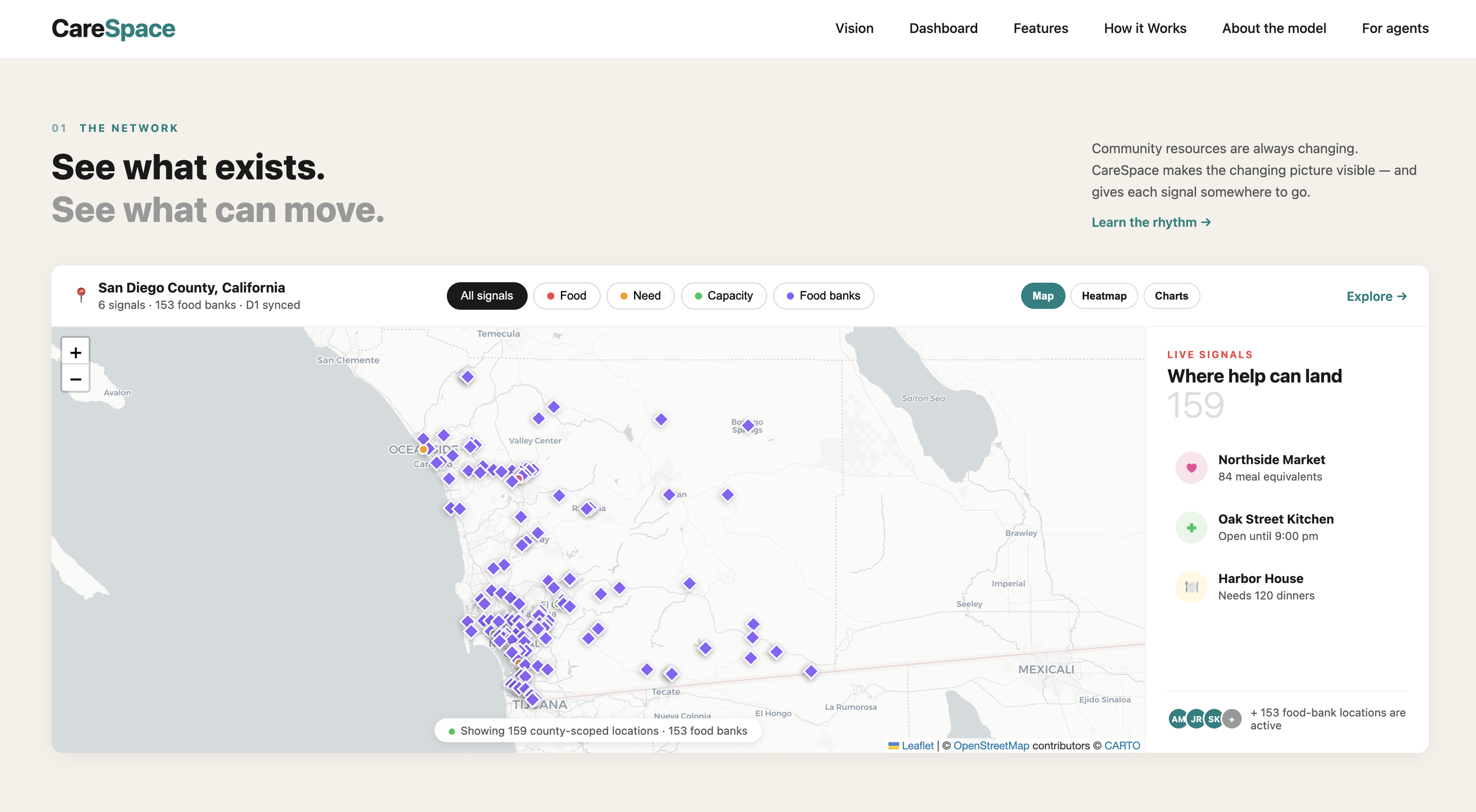
I helped design CareSpace, an AI-powered space management and inventory platform built to give food banks real-time visibility into storage capacity and get more donated food to families before it spoils.
CLIENT
CareSpace Case Study
Sector
Social Innovation / Food Security / AI & Data
Role
AI & Data Experience Design
CREATIVE SERVICES
UX Research, Service Design, AI/Data Experience Design, Product Strategy
CHALLENGE
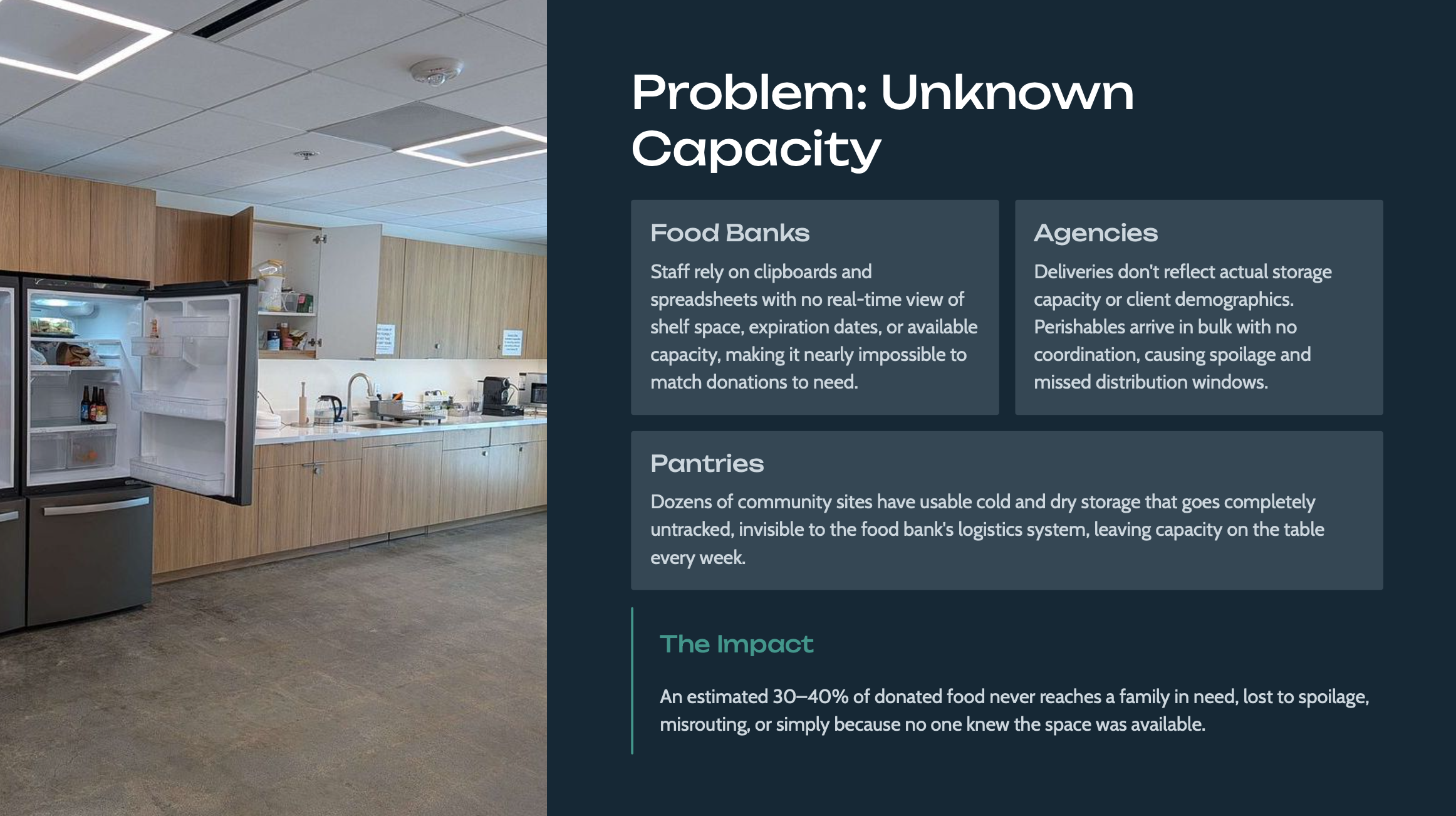
Food banks run one of the most complex logistics networks in the social sector — matching donated food to available storage and to every agency and pantry that needs it, often within hours before it spoils. At Food Bank San Diego, that matching happens largely on clipboards and spreadsheets. Staff have no real-time view of shelf space, expiration dates, or available capacity across the network. Deliveries to partner agencies don't reflect their actual storage capacity or client demographics, and perishables arrive in bulk with no coordination. Meanwhile, dozens of community pantries sit on usable cold and dry storage that's completely invisible to the food bank's logistics system. The result: an estimated 30–40% of donated food never reaches a family in need, lost to spoilage, misrouting, or capacity nobody knew was there.
OPPORTUNITY
Built for the Building for Good Hackathon in partnership with Food Bank San Diego, this project was an opportunity to close the gap between what a food bank actually has and what its network actually needs. The goal was to design a platform that could:
Give warehouse staff, agencies, and pantries real-time visibility into available storage capacity
Use computer vision and AI to remove manual counting and guesswork from inventory tracking
Automatically match supply to demand so donations get allocated to where they're needed most before they spoil
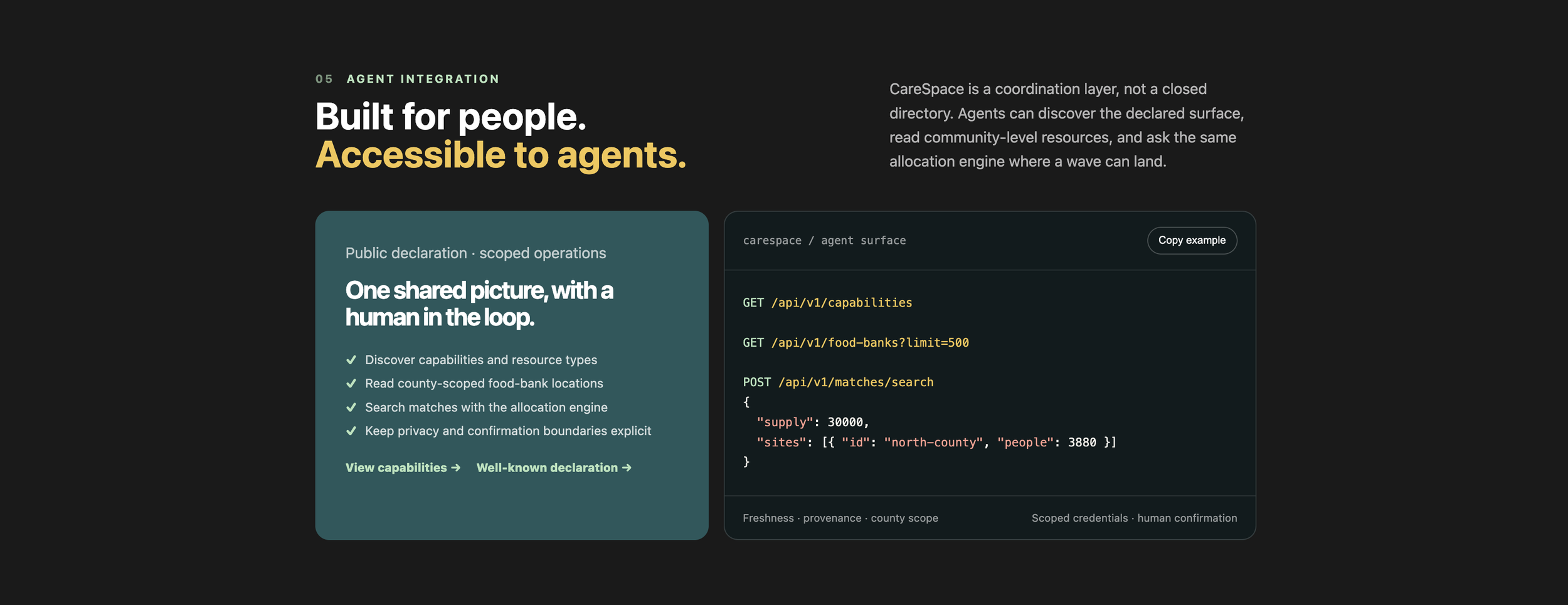
Integrate seamlessly with the food bank's existing systems (Oasis) rather than replacing them
Scale from a single pilot site to a regional, and eventually nationwide, food security network
OUTCOME
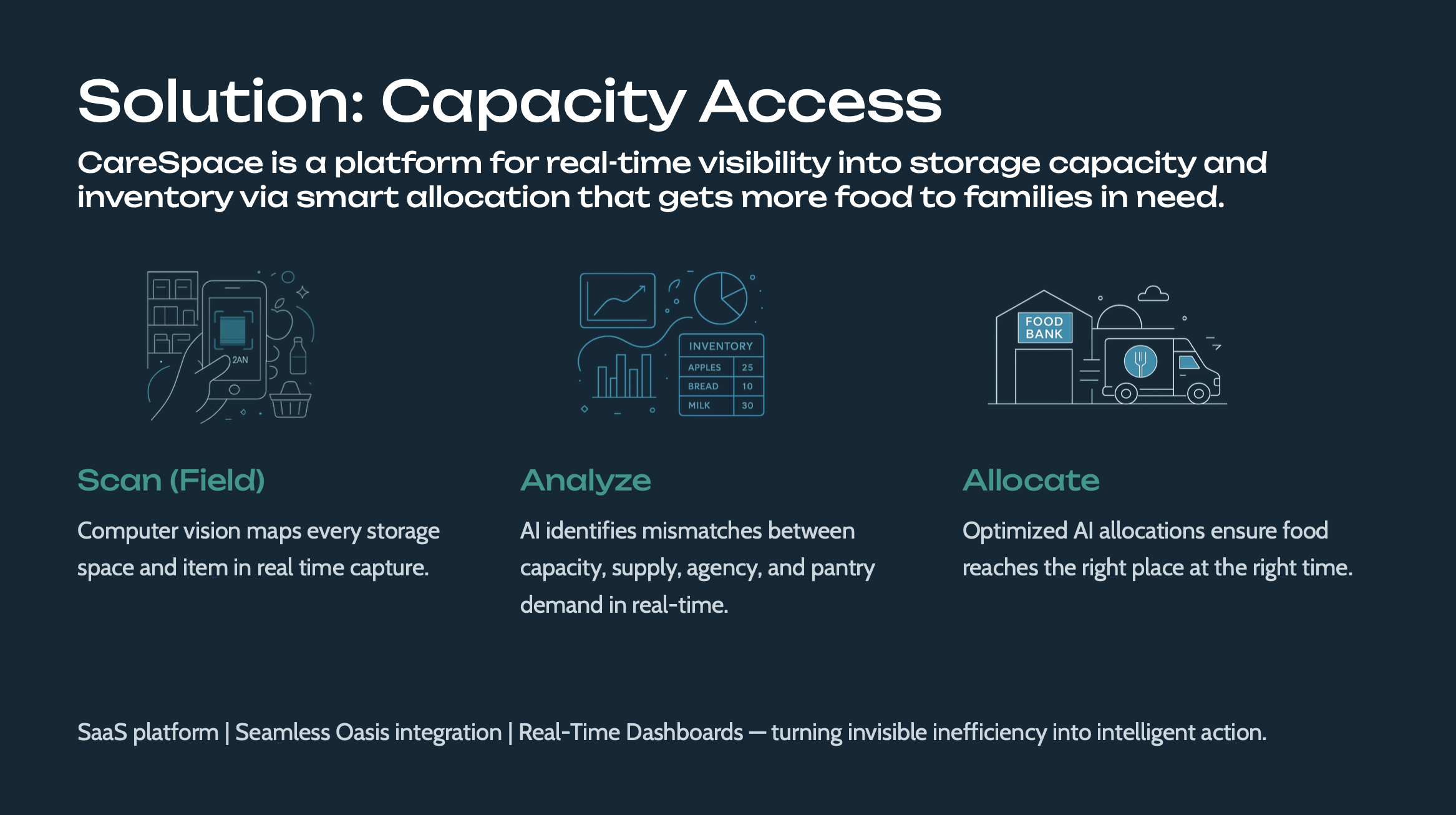
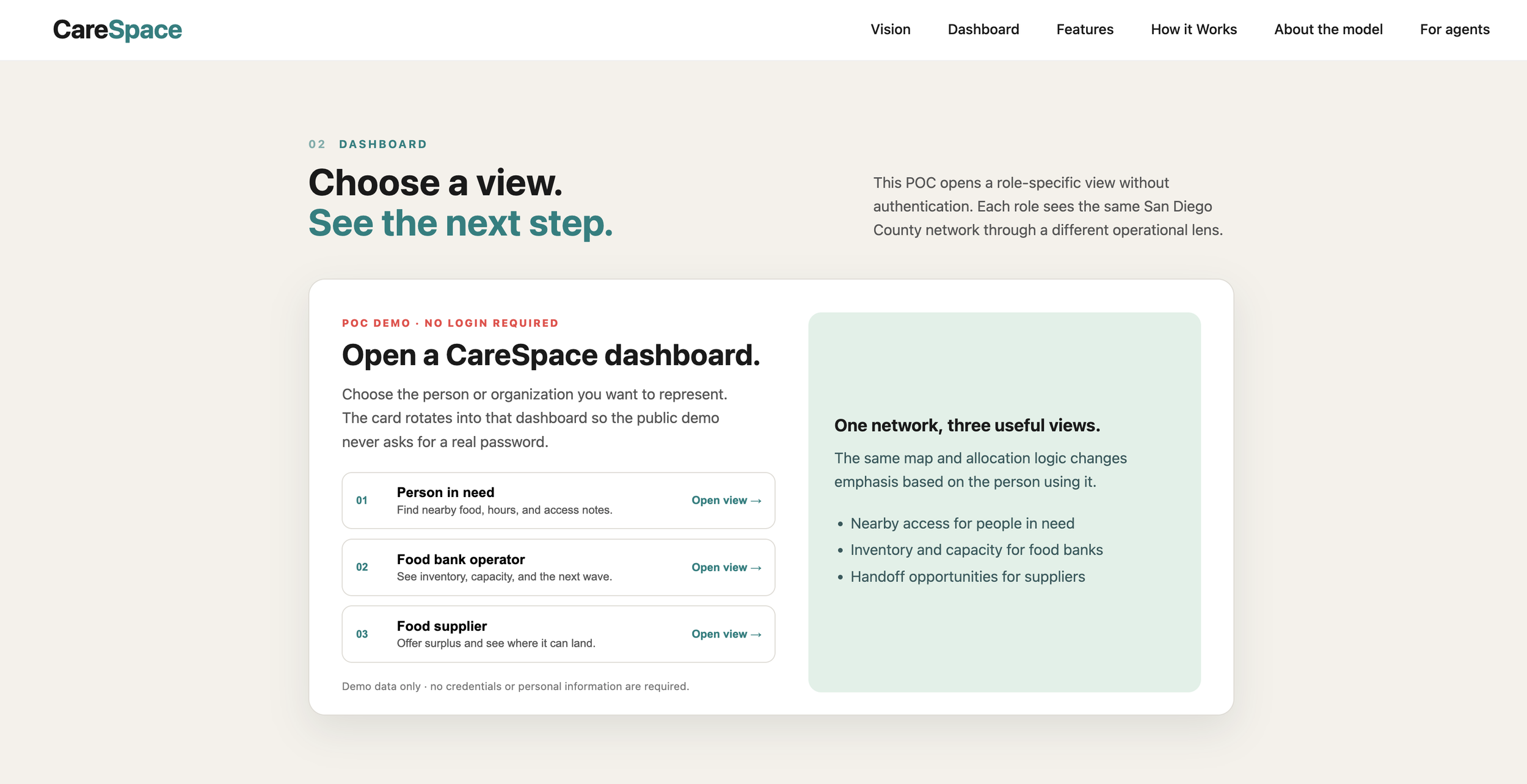
We designed CareSpace, a SaaS platform built around three steps: Scan, Analyze, Allocate. In the field, warehouse and agency staff use computer vision to map every storage space and item in real time. CareSpace's AI engine then analyzes that data to identify mismatches between capacity, supply, agency needs, and pantry demand. Finally, optimized allocations route food to the right place at the right time, synced in real time with the food bank's existing Oasis system.
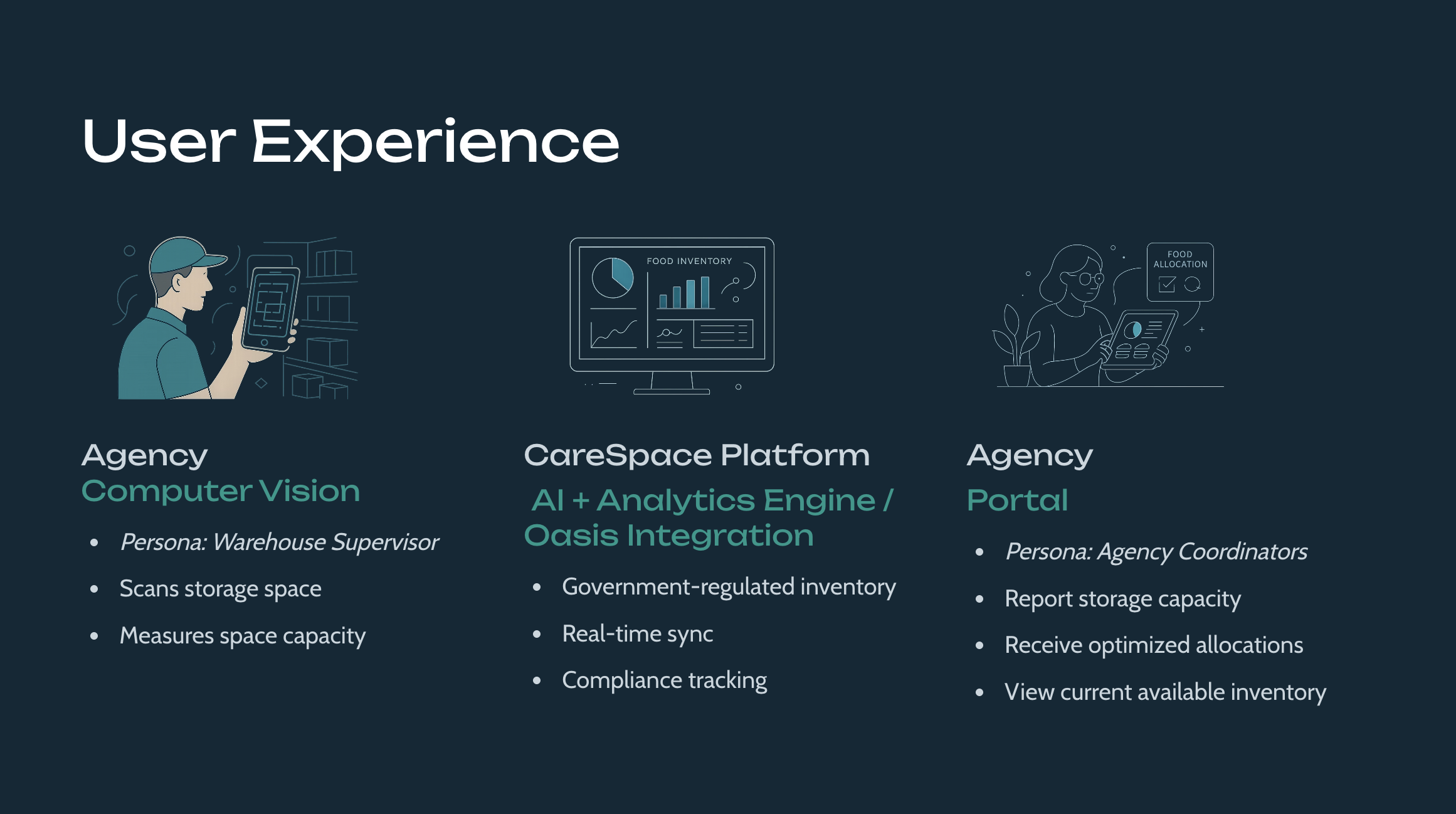
I designed the experience around three connected touchpoints — an agency-facing computer-vision scanning tool for warehouse supervisors, the core CareSpace platform where the AI/analytics engine identifies mismatches and compliance issues, and an agency portal where coordinators report capacity and receive optimized allocations. To get there, I mapped the causal loops driving the current system's failure — unknown capacity leads to guesswork, which leads to oversupply or undersupply at the agency or pantry level, which reinforces the cycle — and built personas around the four people most affected: the food bank operations manager, the agency director, the warehouse supervisor, and the pantry manager, each with distinct goals and pain points that the platform had to solve for simultaneously.
FRAMING
FEATURES
DAY IN A LIFE
ETHNOGRAPHIC RESEARCH
DEMO
SOCIAL IMPACT
ROADMAP
RESULTS
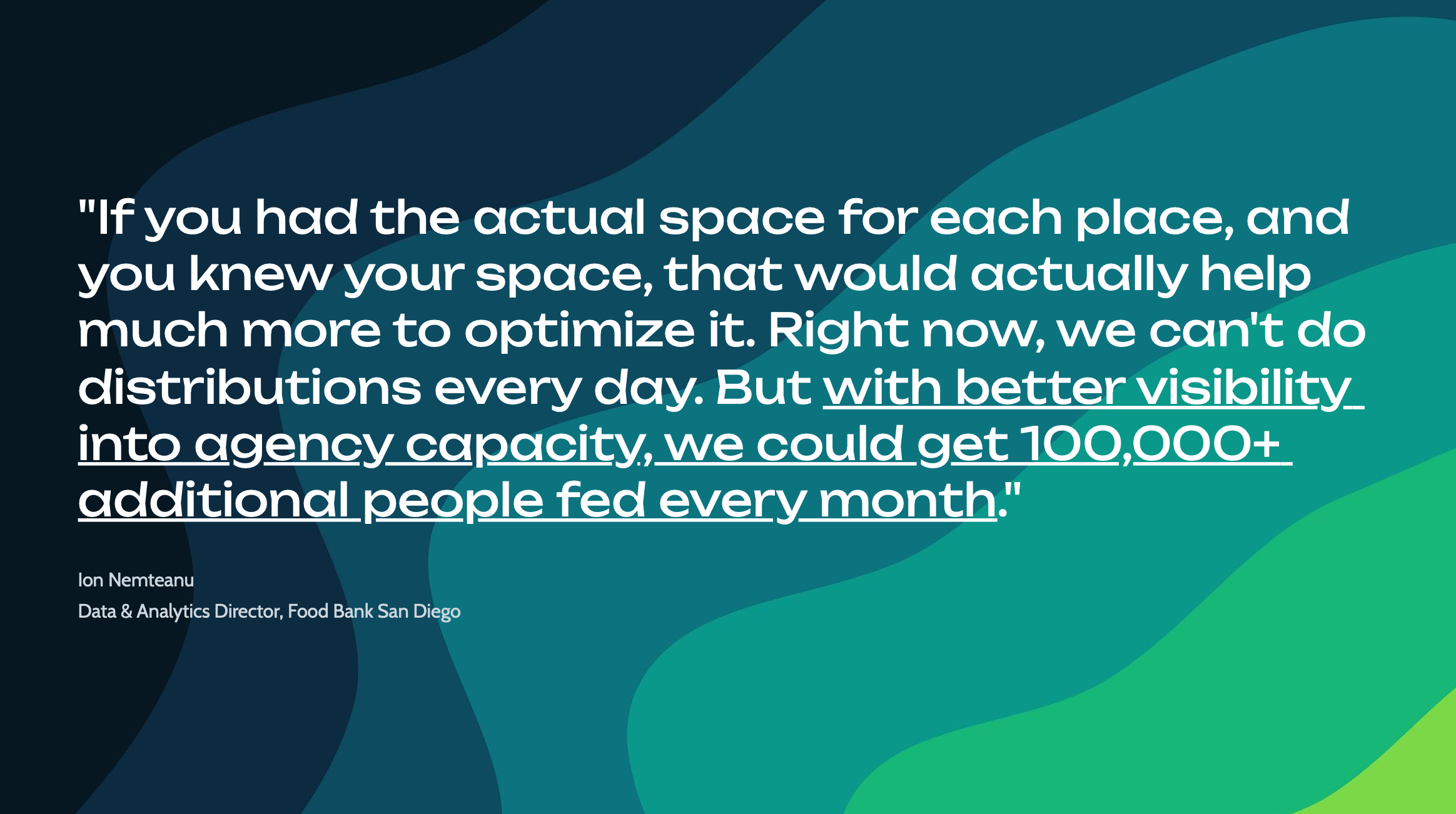
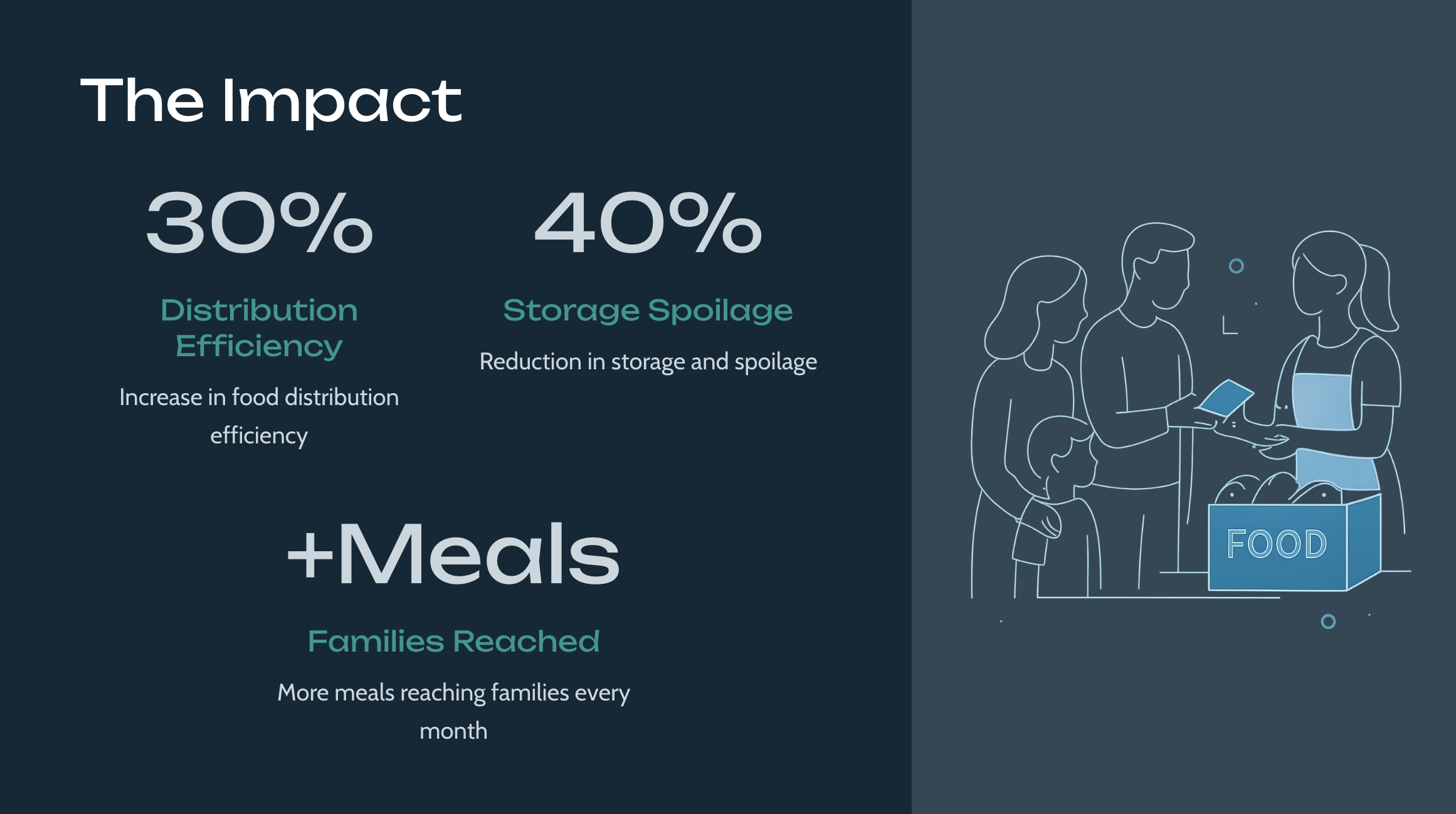
Modeled against Food Bank San Diego's current operations, CareSpace is projected to increase distribution efficiency by 30% and reduce storage spoilage by 40% — translating directly into more meals reaching families every month. As Ion Nemteanu, Data & Analytics Director at Food Bank San Diego, put it:
"If you had the actual space for each place, and you knew your space, that would actually help much more to optimize it. Right now, we can't do distributions every day. But with better visibility into agency capacity, we could get 100,000+ additional people fed every month."
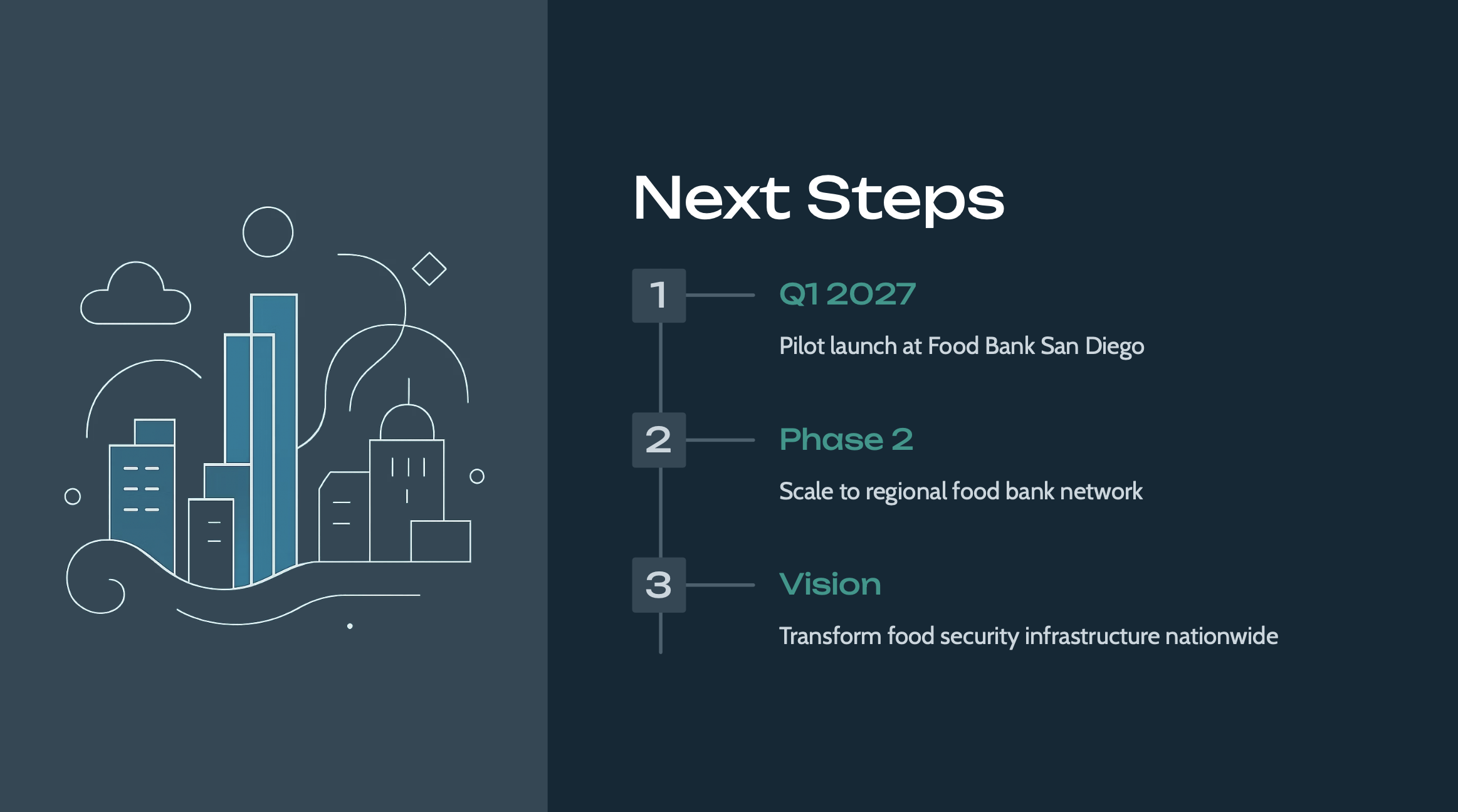
The team's roadmap targets a Q1 2027 pilot launch at Food Bank San Diego, followed by a Phase 2 scale to the regional food bank network, with a long-term vision of transforming food security infrastructure nationwide.
REFLECTION
This project pushed me to design for a system where the "user" isn't one person but four — a warehouse supervisor, an agency coordinator, a pantry manager, and an operations director — each making decisions from a different, incomplete view of the same shelf space. Mapping the causal loops behind the food bank's current spoilage problem before proposing a solution made it clear that the real failure point wasn't lack of effort, it was lack of visibility. It reinforced how much of AI/data experience design in the social impact space is really about building trust in a system fast enough that people will actually replace the spreadsheet — and how a well-scoped hackathon constraint can force real clarity about what to solve first.