
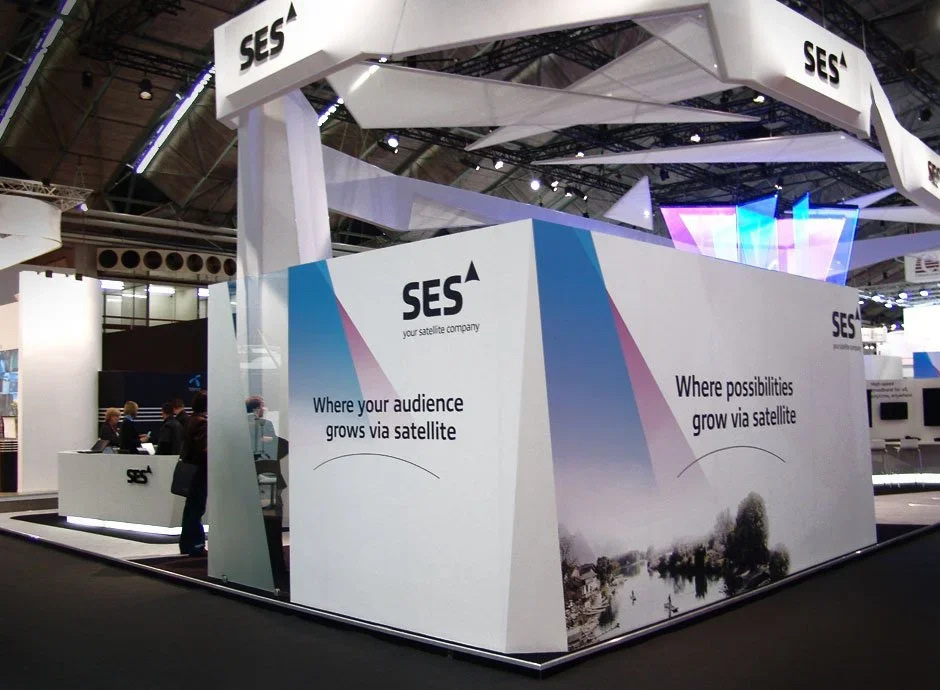
Unifying SES into one global brand system
Following a major restructuring, I helped consolidate SES Astra and SES World Skies into a single scalable identity, built to perform consistently across digital, print, and environmental touchpoints.
client
Société Européenne des Satellites (SES)
Sector
Global Satellite Communications (B2B)
Role
Brand Designer (Brand System Lead)
CREATIVE SERVICES
Brand Identity System, Brand Guidelines, Digital & Web, Marketing & Publication Design, Spatial & Environmental Applications
CHALLENGE
Following a major corporate restructuring, SES needed to unify two legacy organizations—SES Astra and SES World Skies—into a single global brand. While both entities were technically advanced, fragmented identity systems made it harder to communicate SES’s scale, reliability, and leadership in an increasingly competitive market. The challenge was not only visual consolidation, but building a brand system strong enough to scale across regions, business units, and physical-to-digital touchpoints without losing clarity, trust, or adoption across enterprise stakeholders.
OPPORTUNITY
This transition created an opportunity to reposition SES as a singular, future-facing global infrastructure provider rather than a collection of legacy satellite services. The goal was to design a flexible framework that could evolve with the business while remaining intuitive for long-term internal use.
A unified identity system:
Clarify SES’s role as a modern, global technology leader
Enable consistent execution across teams, partners, and channels
Support expansion into new markets, products, and platforms
OUTCOME
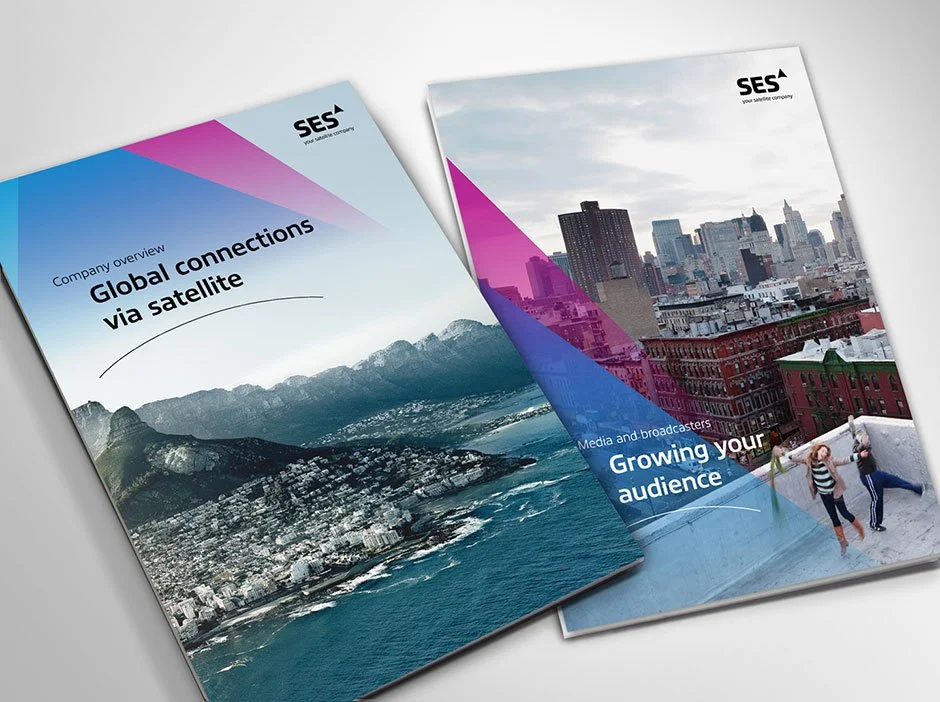
I led the development of a comprehensive visual identity system that unified SES’s legacy brands into a single scalable framework. This included a refined logo system, typography, and modular visual language designed to perform consistently across web, print, marketing, and environmental applications. The resulting system enabled SES to present a cohesive global presence while remaining adaptable across regions and business units. Clear guidelines and repeatable assets supported long-term consistency, helping the brand function as both a strategic narrative and an operational toolkit for rollout.
BRAND STRATEGY
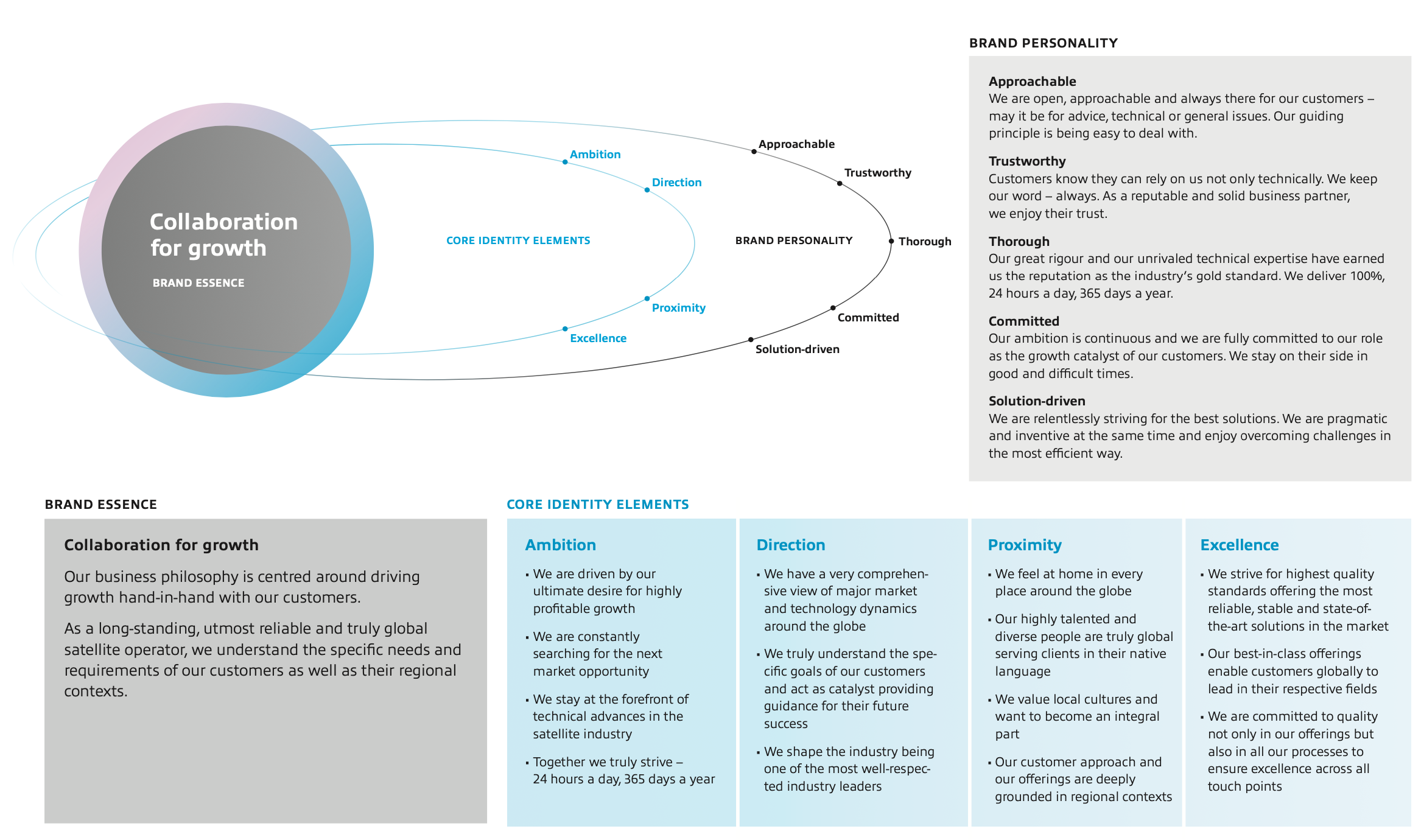
The business decision to align all divisions of the SES organization under a single management structure necessitated the creation of a powerful SES master brand on a global scale. The SES master brand is instrumental in achieving improved clarity and consistency of offerings towards different customer segments and their specific needs. While optimally serving existing segments and future growth areas, it is designed to leverage synergies between different offerings.
BRAND ARCHITECTURE

BRAND IDENTITY
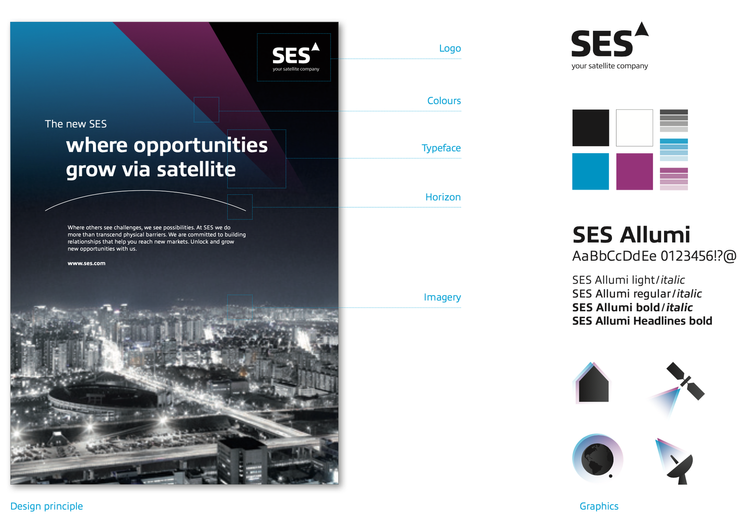
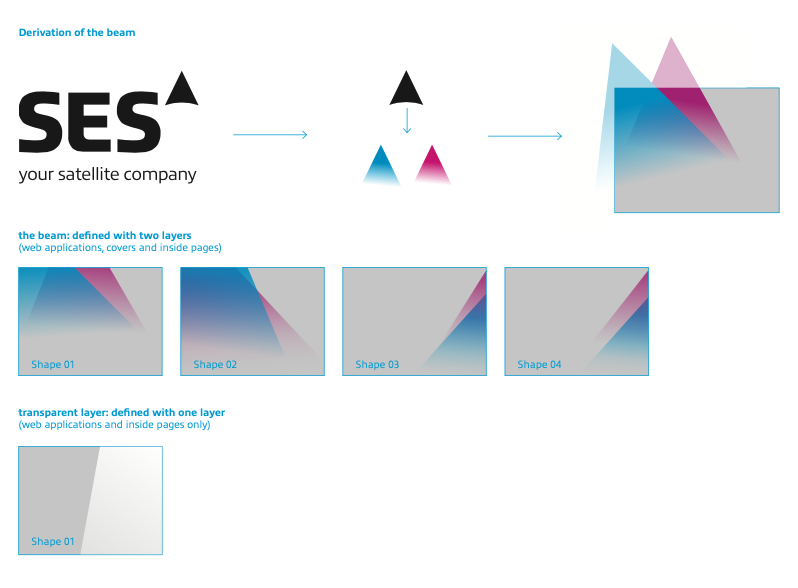
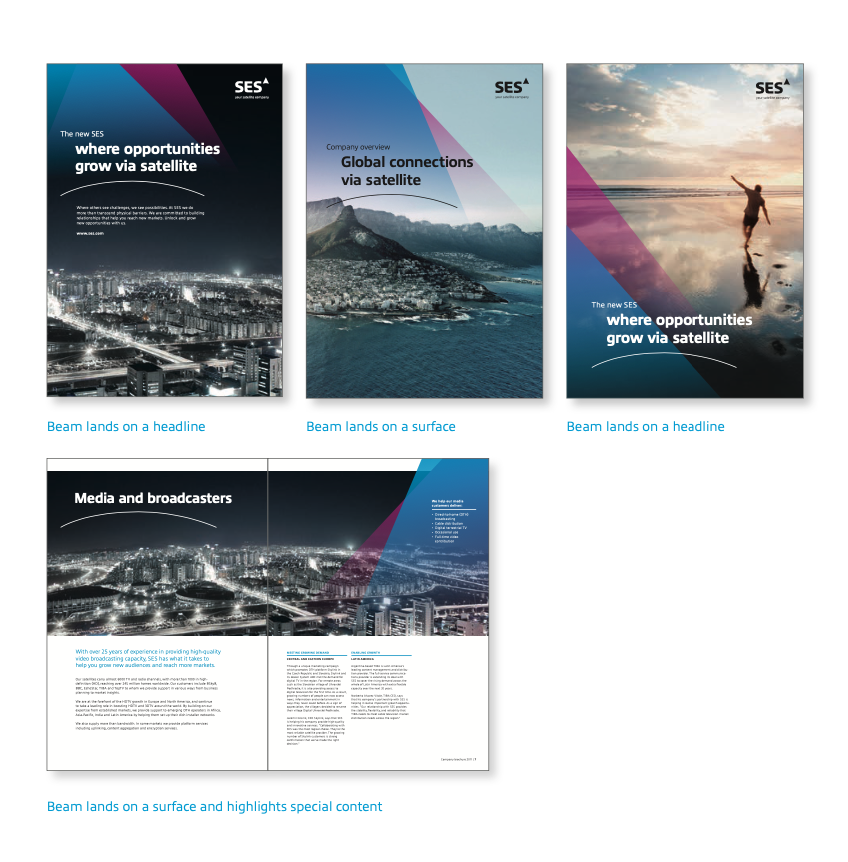
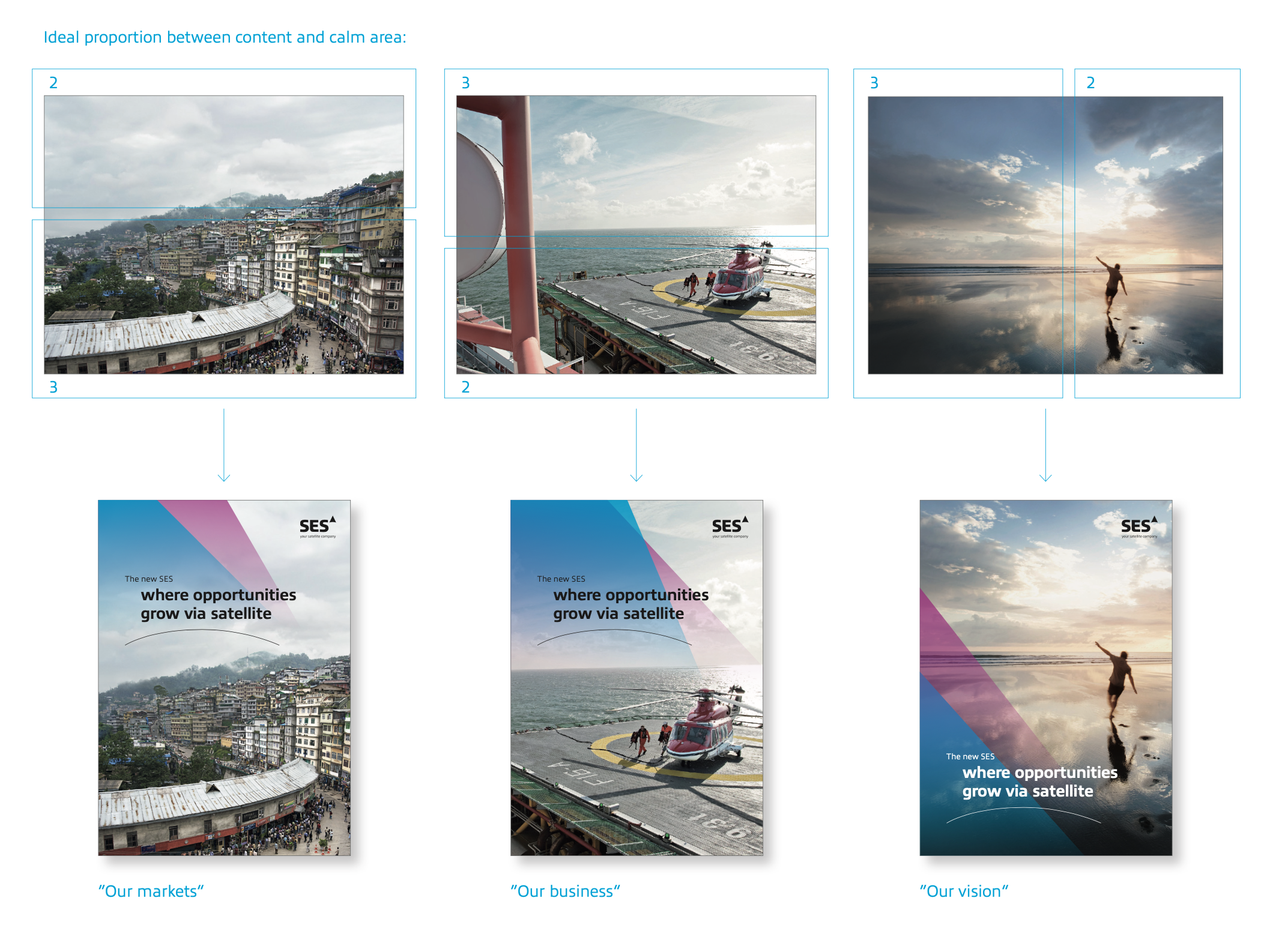
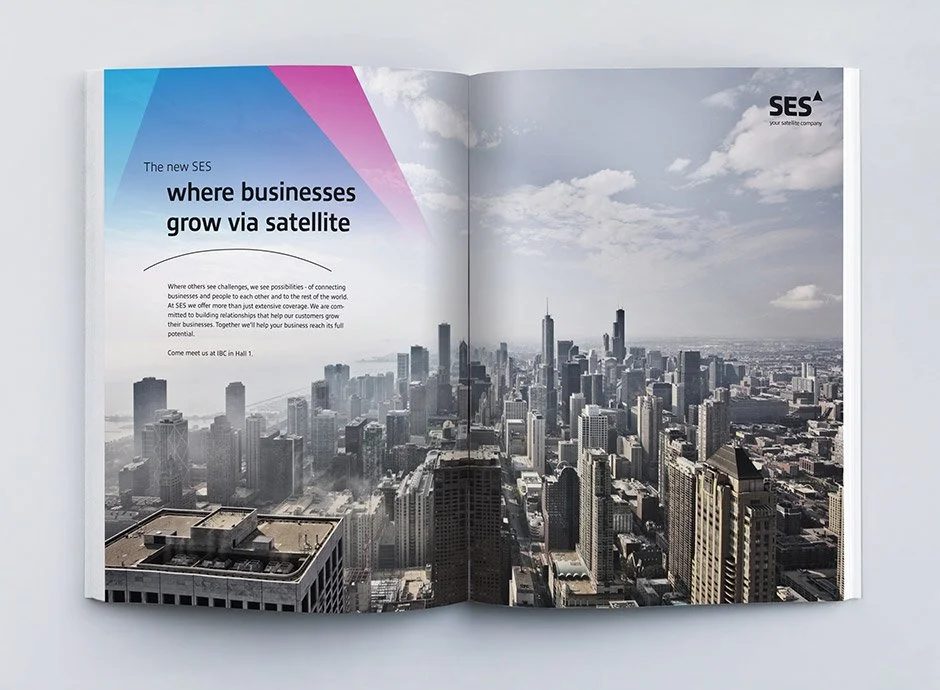
The brand’s key visual element is the beam, it shows the way forward and moves beyond borders. The beam is predefined in a beam shape with two layers, transforming everything it touches, thus revealing the positive impact of SES.
BRAND NAME / CLAIM
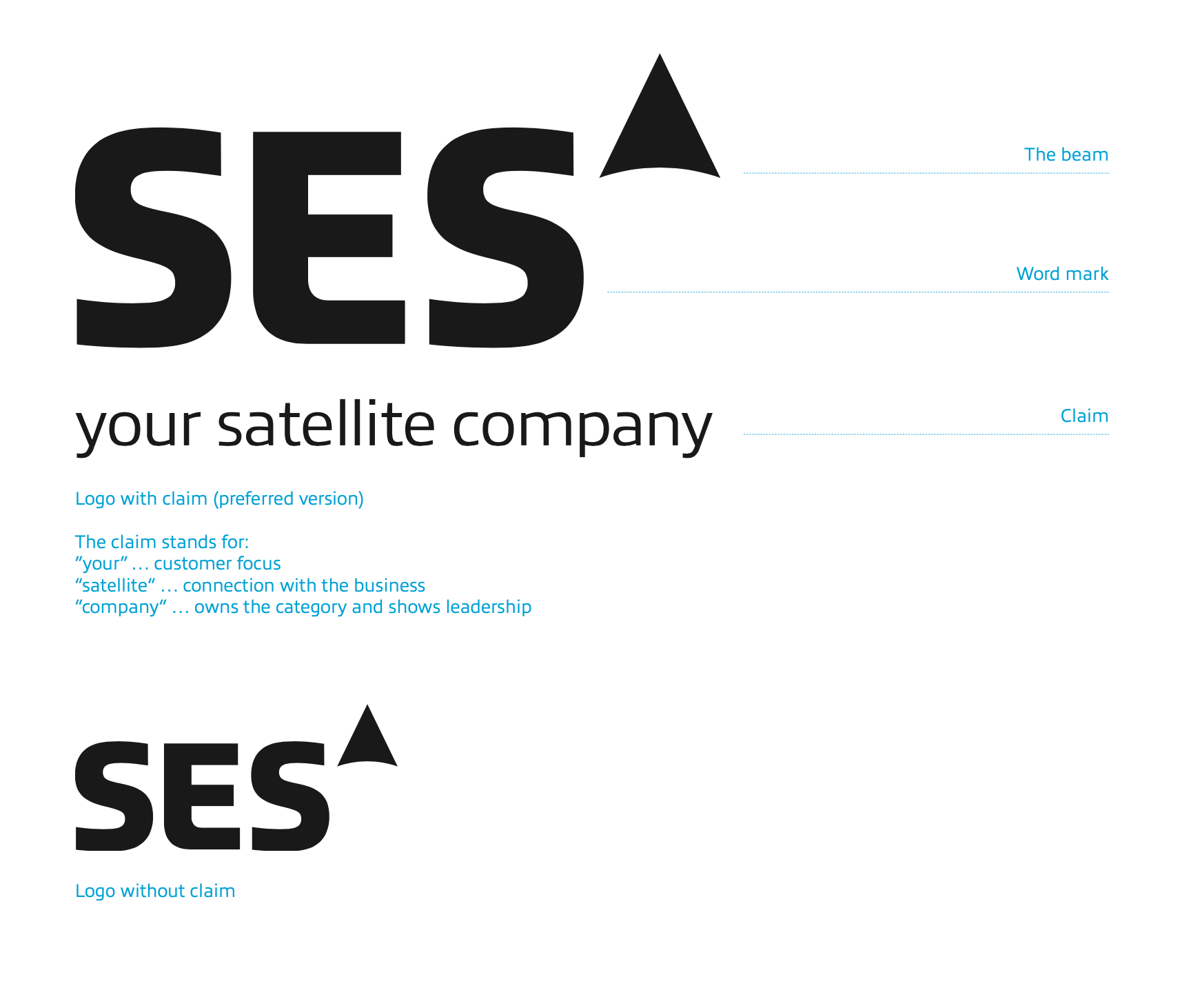
The symbol (beam) unifies SES into one strong umbrella brand. The typography conveys approachability and combines technology with a human touch, as seen in the contrast of sharp and rounded edges in all letters.
TYPOGHRAPHY
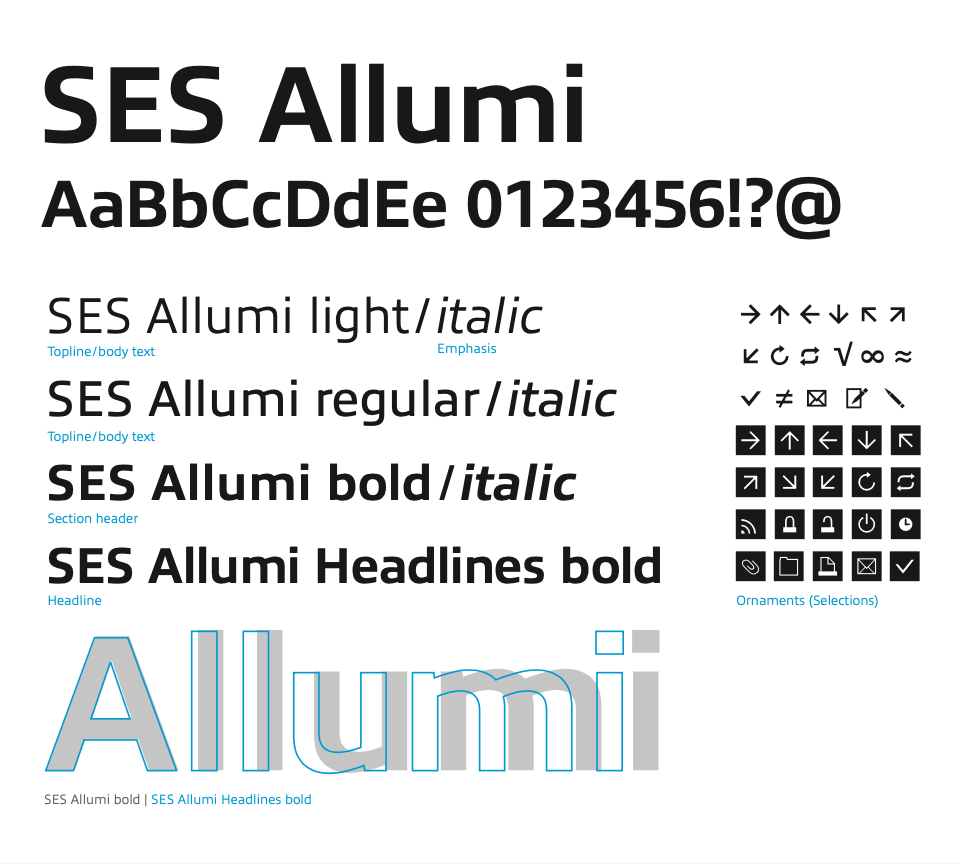
SES Allumi is a sleek typeface designed with technology in mind. The SES Allumi shapes are neither perfectly round nor geometrically square. It’s a human design with a high tech touch.
PURPOSE, VISION & VALUES

BRAND GUIDELINES
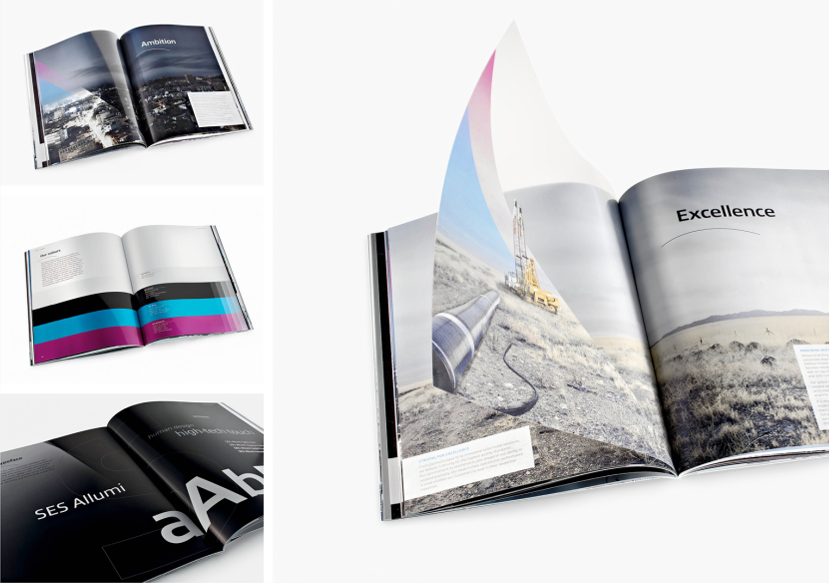
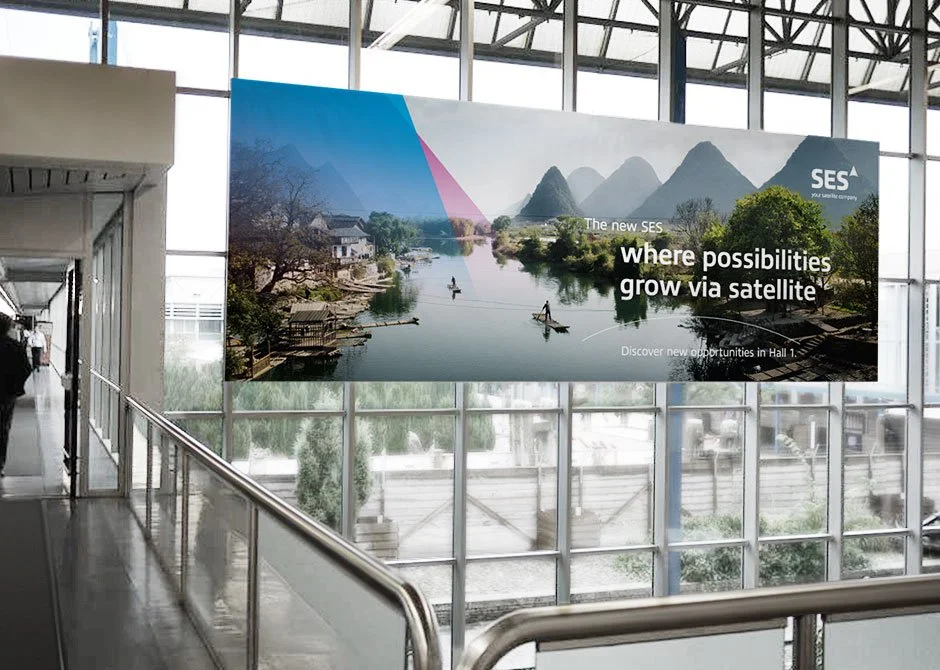
MARKETING & PUBLICATION
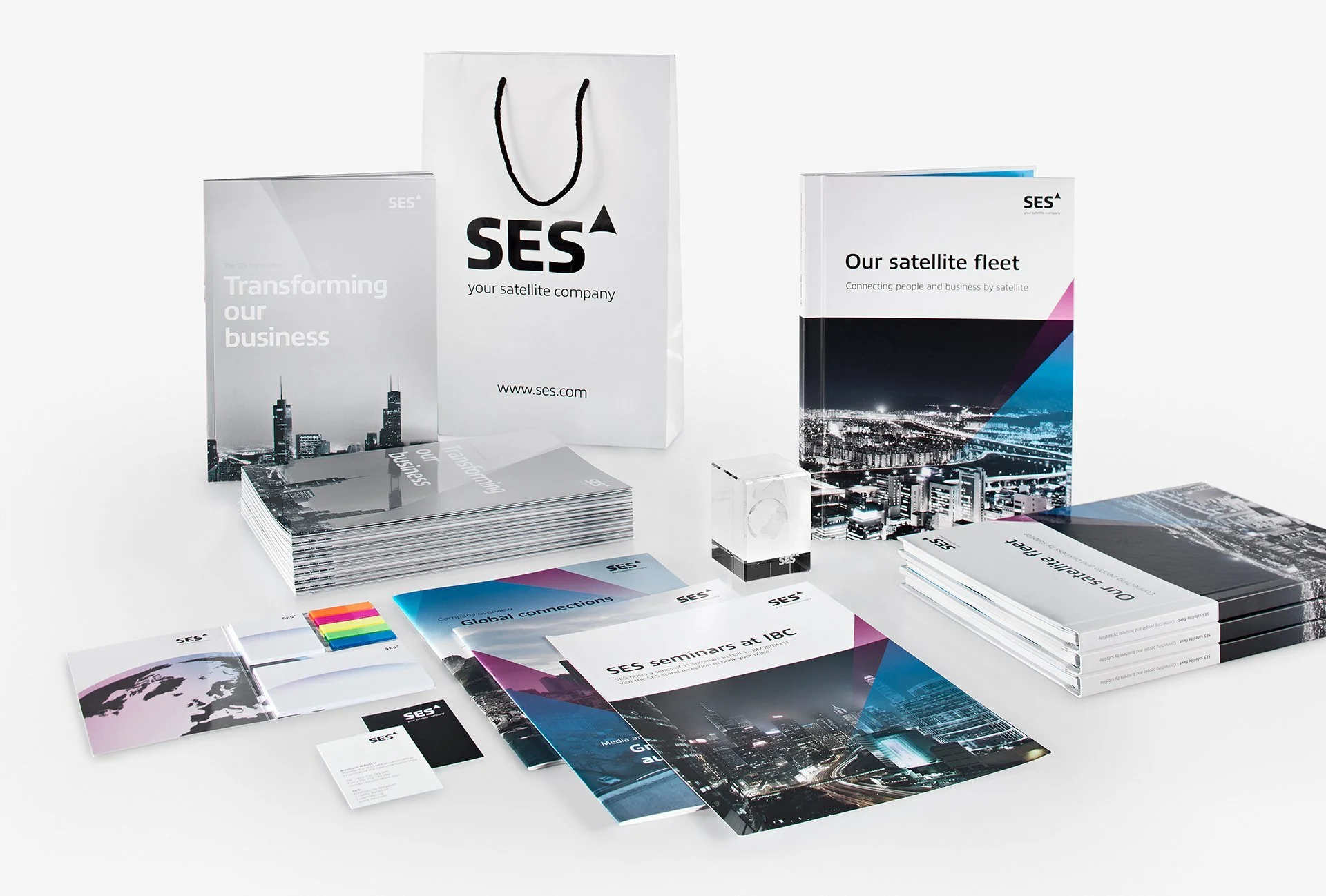


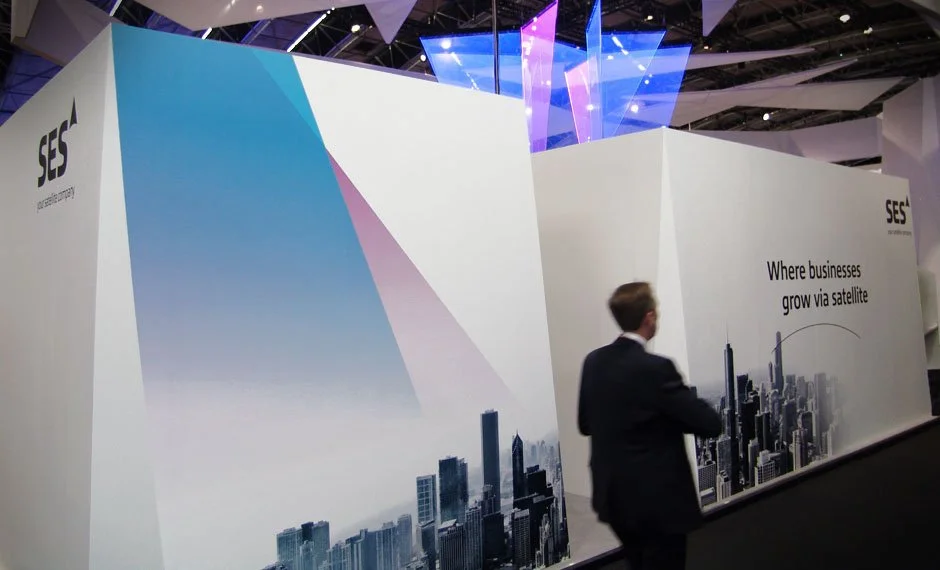
SPATIAL & ENVIRONMENTAL

DIGITAL EXPERIENCE


RESULTS
In partnership with MetaDesign, we delivered a complete identity system and rollout toolkit in a three-month timeline, enabling consistent execution across digital, print, and environmental touchpoints. The work was recognized with a Corporate Design Award and a Rebrand Award.
KEY LEARNINGS
Systems thinking wins at scale: Translating brand strategy into modular design rules created consistency across web, editorial, marketing, and environmental applications.
Consistency is operational, not aesthetic: Guidelines only work when they’re usable—so I focused on building repeatable assets and decision frameworks teams could apply accurately across regions and channels.
Craft protects brand trust: Quality control across production formats (digital and print) reinforced brand credibility and prevented inconsistencies during rollout.