
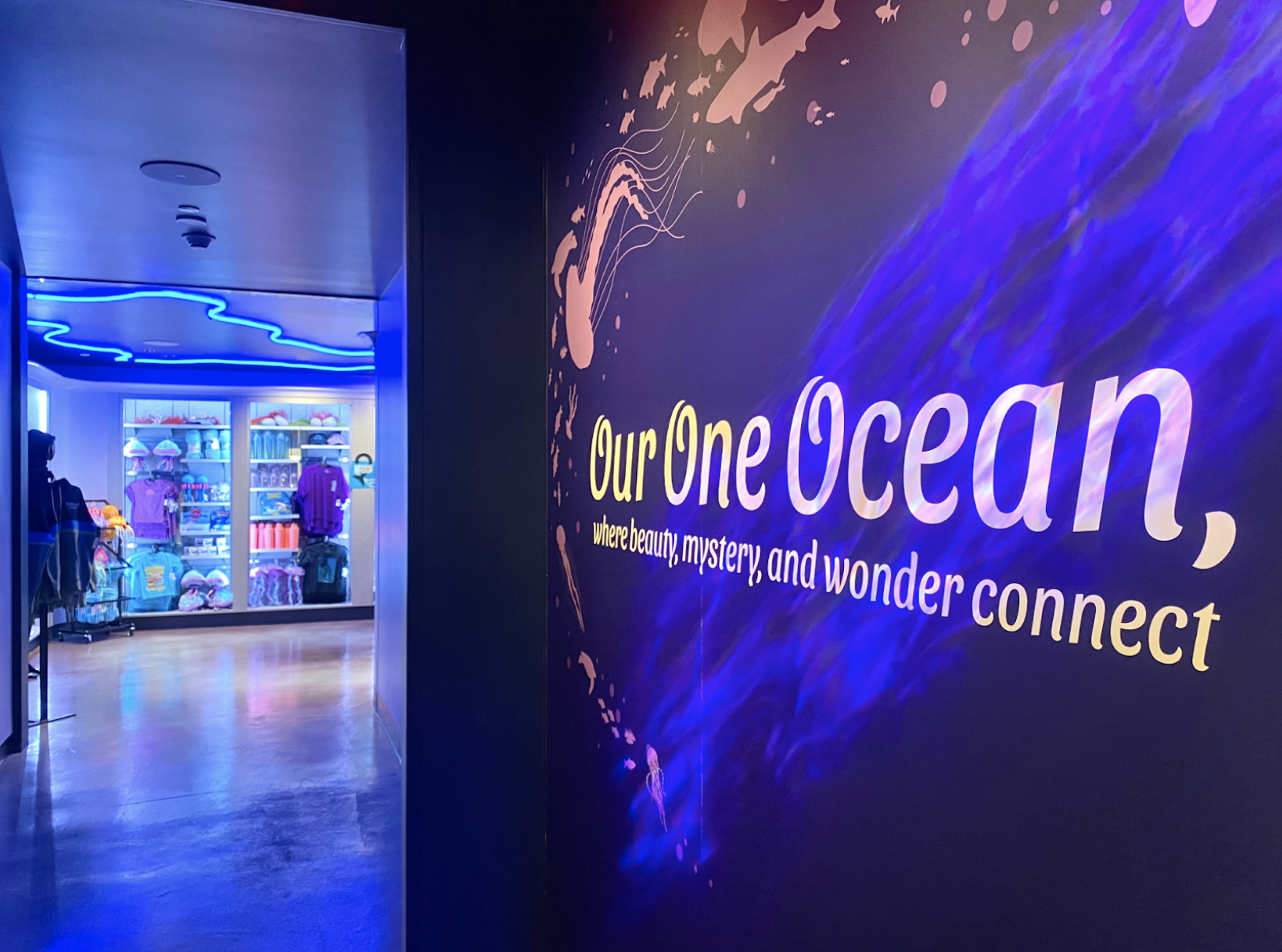
Park-wide environmental graphics at scale, built for guest experience and performance
I led seasonal Visual Merchandise execution across SeaWorld’s full retail footprint, translating product stories into intuitive navigation, high-impact displays, and consistent in-store standards.
Client
SeaWorld, RETAIL & amusement / theme park
Role
Environmental Graphic Design & Visual Merchandising Specialist
Deliverables
Branded Environments, Retail and Point-of-Purchase Display
Team
VP Retail, Merchandise Director, Product Manager, VM Supervisor, internal vendors/fabricators, Back-of-House
PROBLEM
Theme park retail is a high-traffic, high-noise environment where guests make fast purchase decisions while navigating crowds, limited time, and constant sensory input. In this context, even great products underperform when storytelling lacks hierarchy, navigation is unclear, or execution is inconsistent across stores. SeaWorld needed a scalable visual merchandising approach that could deliver consistent brand standards, strong product storytelling, and high-performing guest experiences across 36 store locations and rapidly changing seasonal campaigns.
OPPORTUNITY
This work presented an opportunity to strengthen SeaWorld’s retail experience by aligning brand, space, and product into a repeatable environmental graphic system.
Increase product discovery through clearer zoning and feature moments
Improve shopability by simplifying navigation and storytelling hierarchy
Maintain consistent execution across teams, shifts, and 36 store environments
Support sell-through through fast seasonal flips and campaign rollouts
OUTCOME
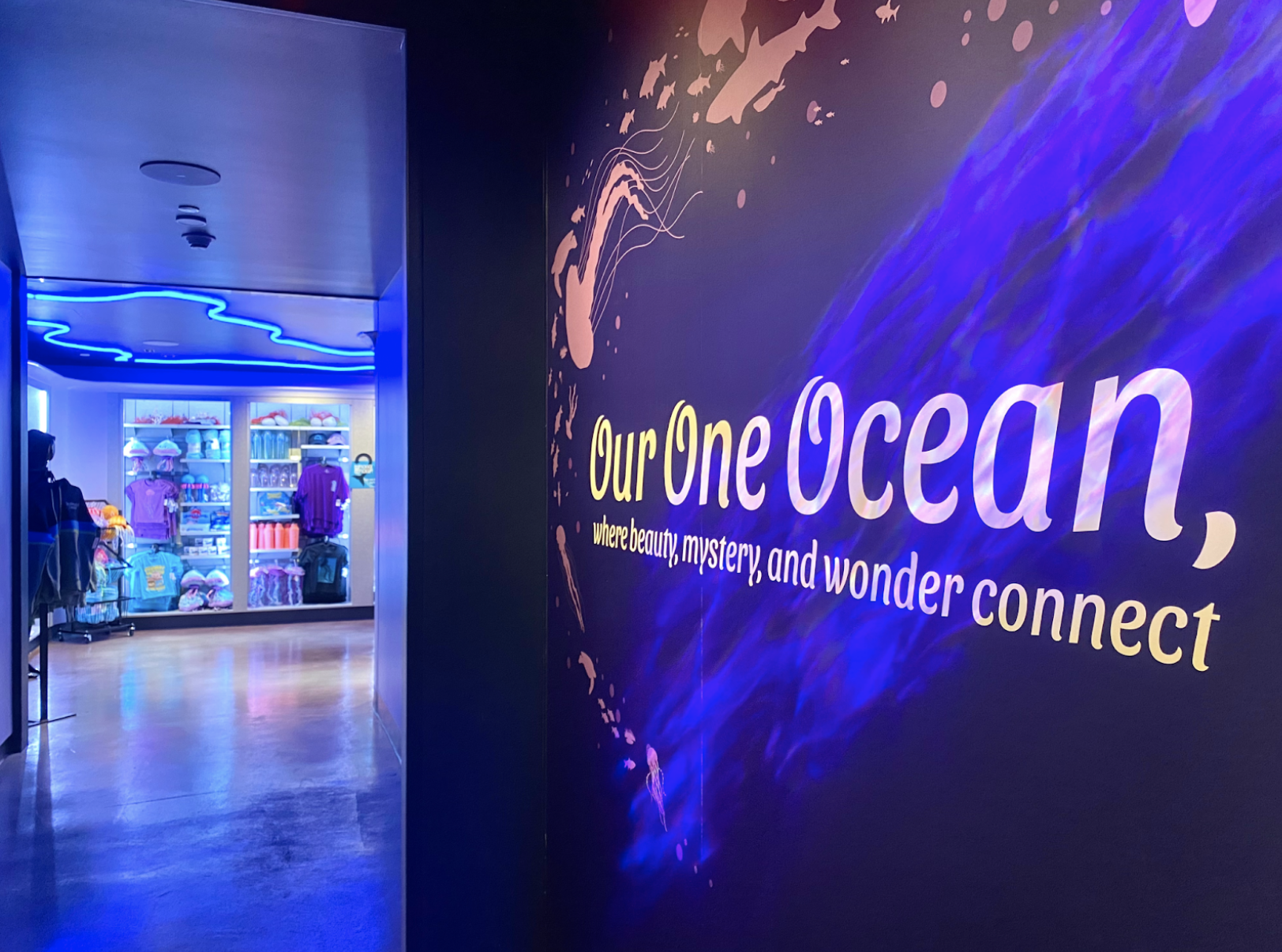
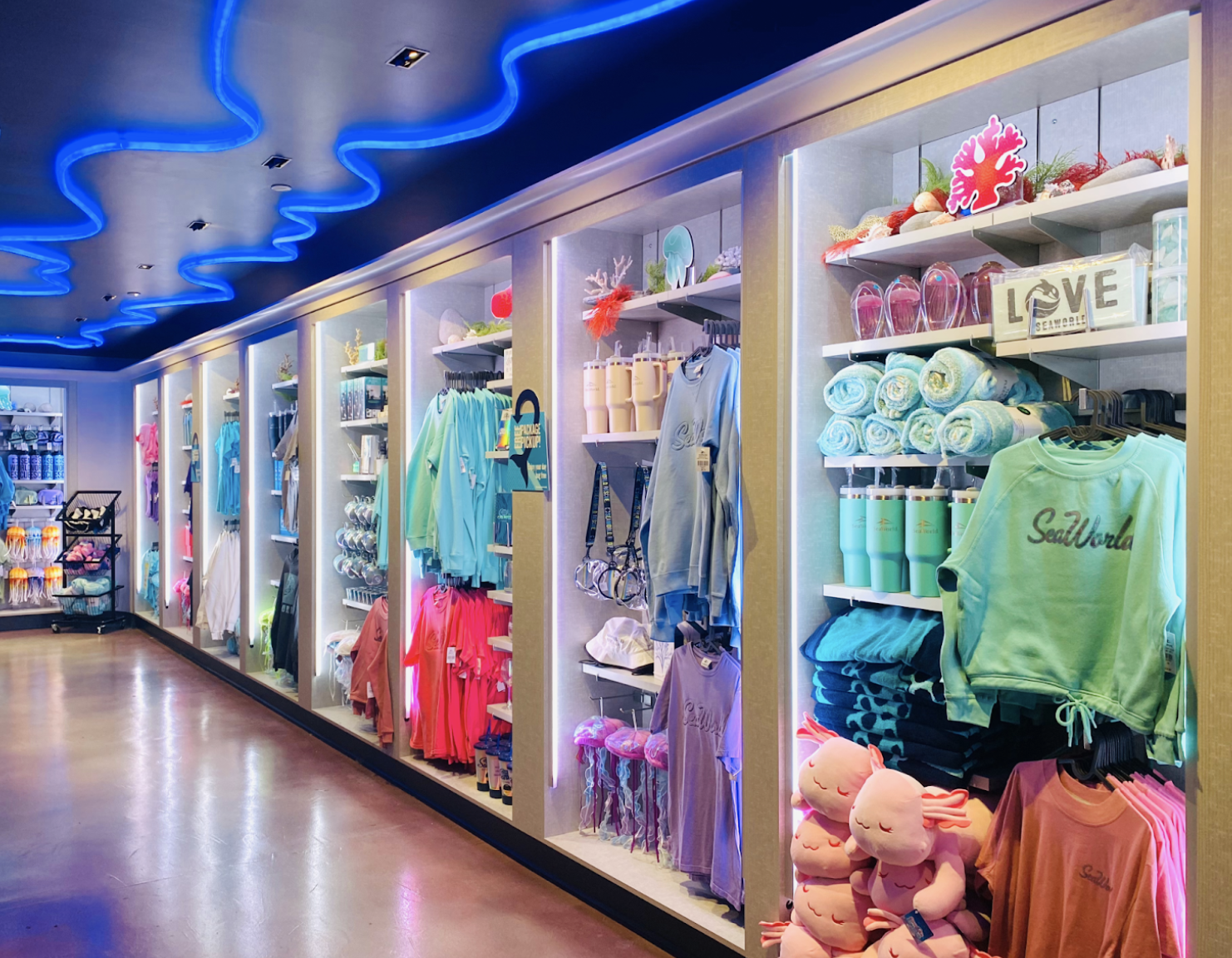
I contributed to the execution of environmental graphic systems that translated SeaWorld’s seasonal product stories into clear, human-centered spatial experiences at park-wide scale. The work supported intuitive navigation, cohesive storytelling, and guest engagement across high-traffic retail environments. I supported cohesive product presentation across windows, mannequins, fixtures, wall bays, and focal displays through the use of visual hierarchy, color flow, and environmental storytelling systems to improve shopability and clarity. In partnership with retail leadership and operations teams, I helped deliver weekly and seasonal environmental updates, including signage and labeling, ensuring brand standards were implemented consistently across the full retail footprint in coordination with existing architectural conditions and retail layouts.
MY CONTRIBUTIONS
Designed and executed two-and three-dimensional environmental graphics across windows, fixtures, mannequins, and POP moments
Prepared visual mockups and in-context photo visualizations to guide signage placement, hierarchy, and usage
Produced camera-ready artwork (signage, labeling, multi-season assets) and supported accurate execution across locations
Collaborated with retail leadership, product teams, and operations to ensure consistent implementation across the built environment
CAMPAIGN HIGHLIGHTS
Seven Seas Food Festival, Electric Ocean, Howl-O-Scream & Spooktacular, Christmas Celebration, Mardi Gras
RESULTS
Scale + consistency: Executed seasonal VM rollouts across 36 store locations, maintaining consistent brand standards and presentation quality park-wide
Shopability + discovery: Increased product discovery and guest engagement by improving zoning, storytelling hierarchy, and focal display moments
High-volume execution: I supported the execution of high-impact seasonal flips across windows, mannequins, signage, and fixture resets—on tight timelines with leadership approval
Operational efficiency: Helped reduce friction for store teams by supporting standardized display logic and repeatable execution across shifts and locations.
REFLECTION
This work required interpreting brand and business goals into spatial graphic solutions that could be executed consistently by multiple teams. Designing at this scale reinforced how environmental graphics shape human experience—supporting clarity, and emotional connection in high-energy public spaces. The experience strengthened my ability to design and execute within existing systems that perform under real-world constraints such as speed, volume, and constant change. I learned that the most effective retail environments balance emotional brand storytelling with operational clarity—so guests can navigate intuitively, understand product value quickly, and feel connected to the experience. Partnering closely with retail leadership and back-of-house teams further reinforced how repeatable standards, fast execution, and detail-level consistency directly impact sell-through and overall guest experience quality.
KEY LEARNINGS
Guest experience is a design system: Strong VM is not just styling—it’s a repeatable framework for navigation, hierarchy, and product storytelling.
Execution drives performance: Effective VM requires speed, accuracy, and consistency across flips, signage updates, and campaign rollouts.
Collaboration is operational: Partnering with leadership, internal vendors/fabricators, product teams, and back-of-house enables smoother implementation and stronger store-level consistency.